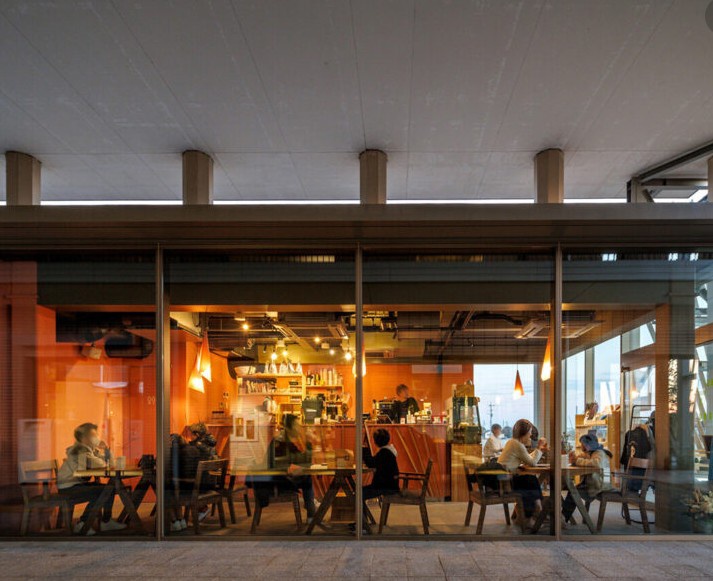


Kengo Kuma and Associates have recently completed this Chikujō Town Public Library, reworking a former public hall into a timber-filled civic space in rural Fukuoka, Japan.
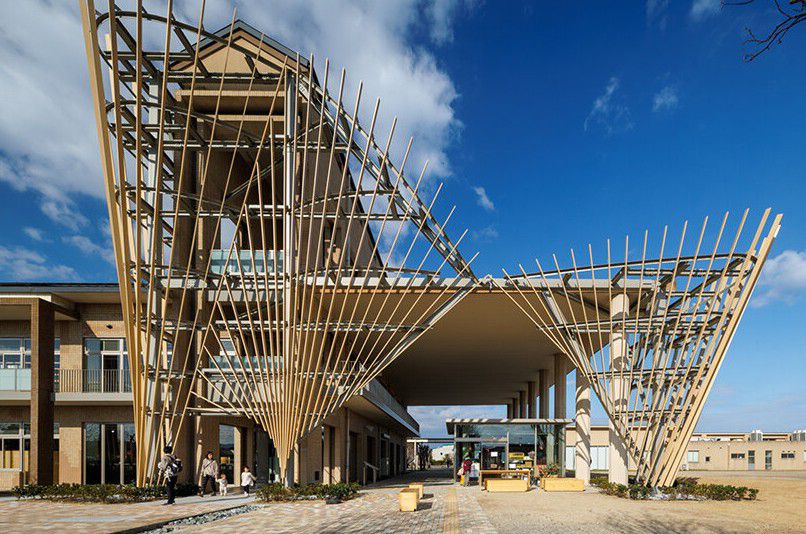
Set within a quiet landscape, the new library presents a low, extended form whose edges are softened by a field of vertical wooden louvers. These slender members gather along the facade and entrance canopy, where they tilt and fan outward, forming a porous threshold between town and interior. Their spacing allows light to pass through while tempering the scale of the existing structure.
Approaching the Chikujō library’s entrance, the louvers rise and bend into a broad canopy which the team at Kengo Kuma and Associates design to frame the main access point. The structure reads as both enclosure and filter, offering shade while guiding movement toward the doors. The rhythm of timber elements creates a shifting pattern across the ground, marking the passage from open plaza to covered approach.
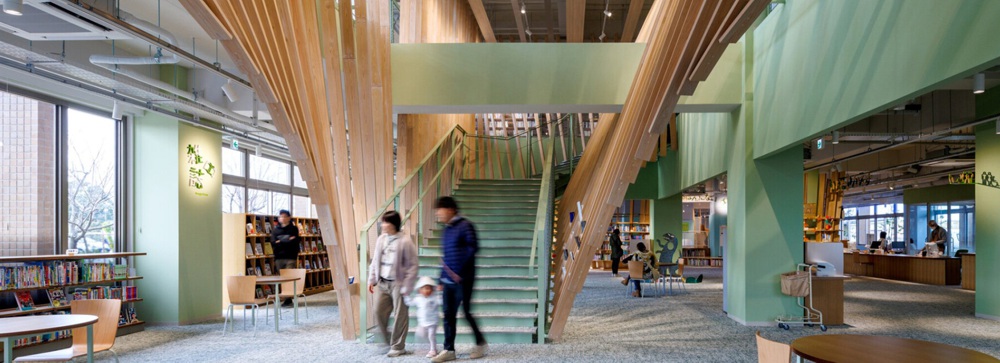
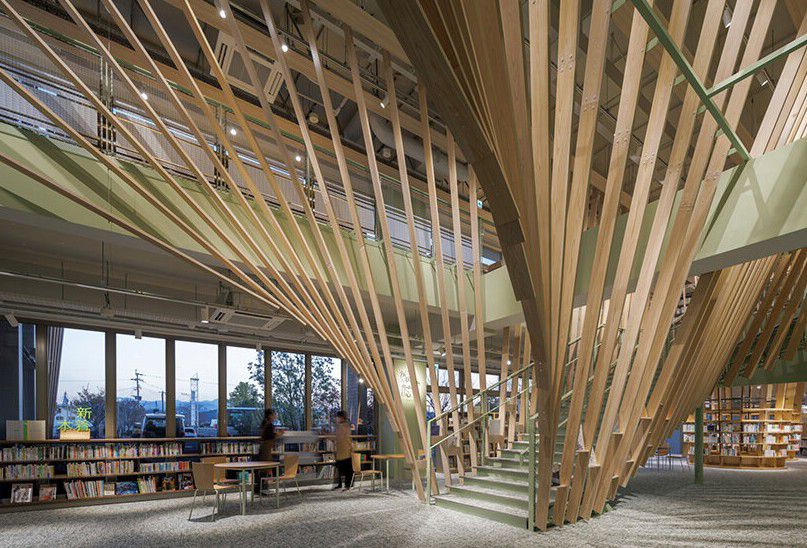
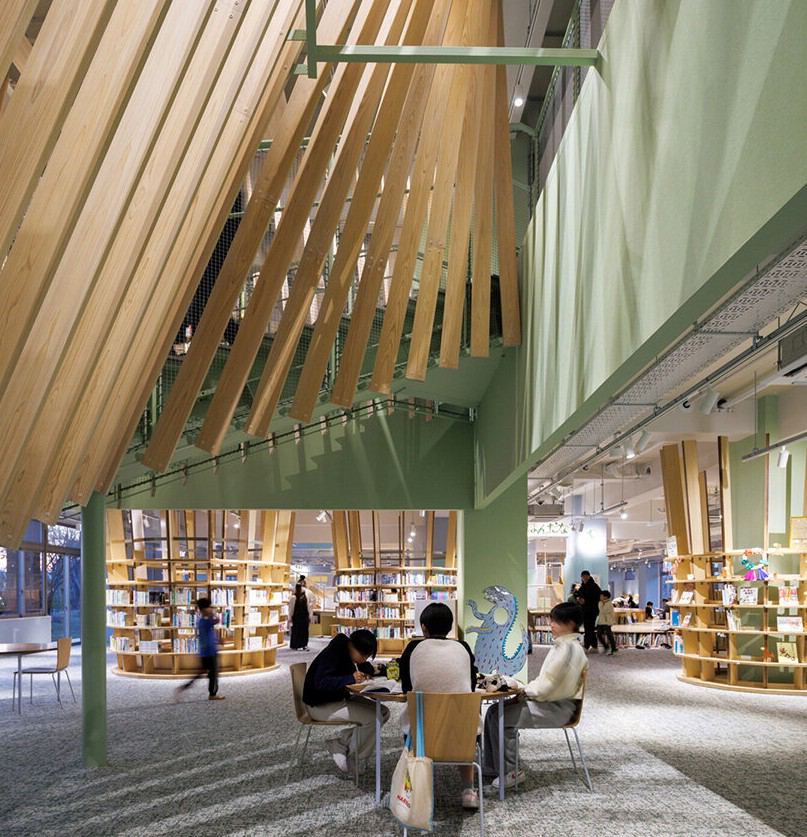
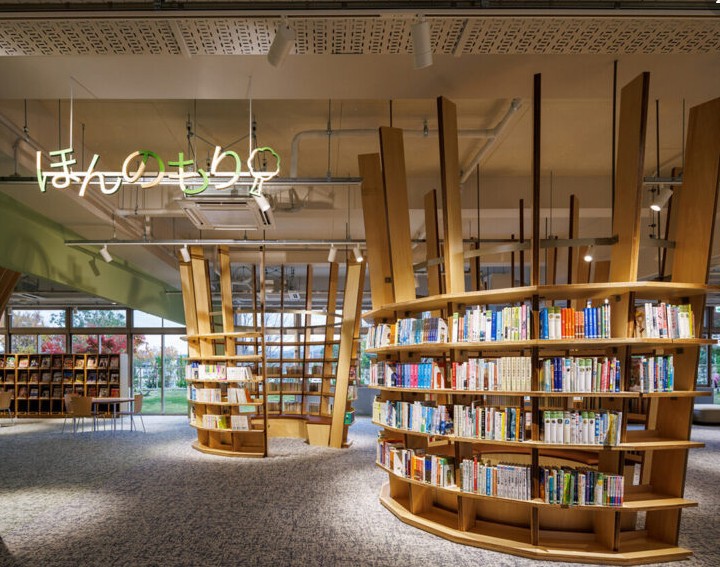
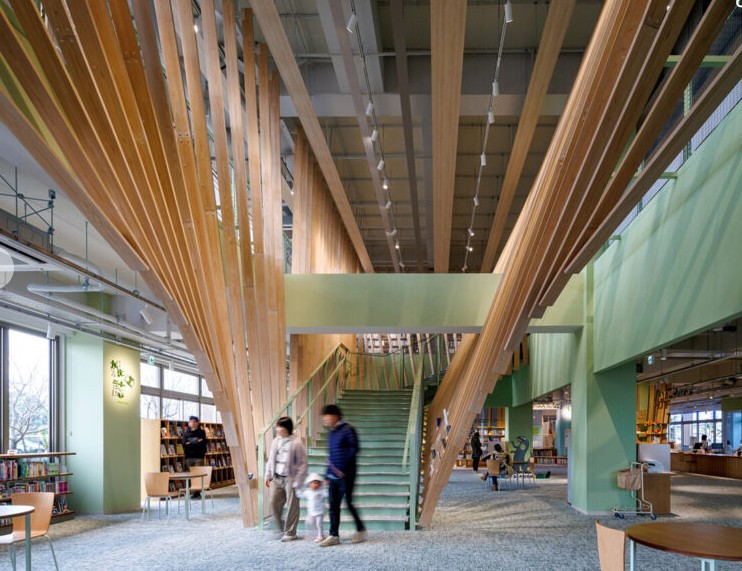
This exterior intervention carries through to the interior, where the same language of vertical timber defines the central atrium. Here, Keichiku cypress (hinoki) is arranged in angled arrays that extend upward from floor to ceiling, tracing a series of branching geometries that organize circulation.
Within the former public hall, Kengo Kuma and Associates’ insertion of timber alters both scale and atmosphere. The original concrete frame remains legible, yet it is softened by the density and warmth of wood. Light filters through the upper levels and moves across the angled members, producing a layered interior that shifts throughout the day.
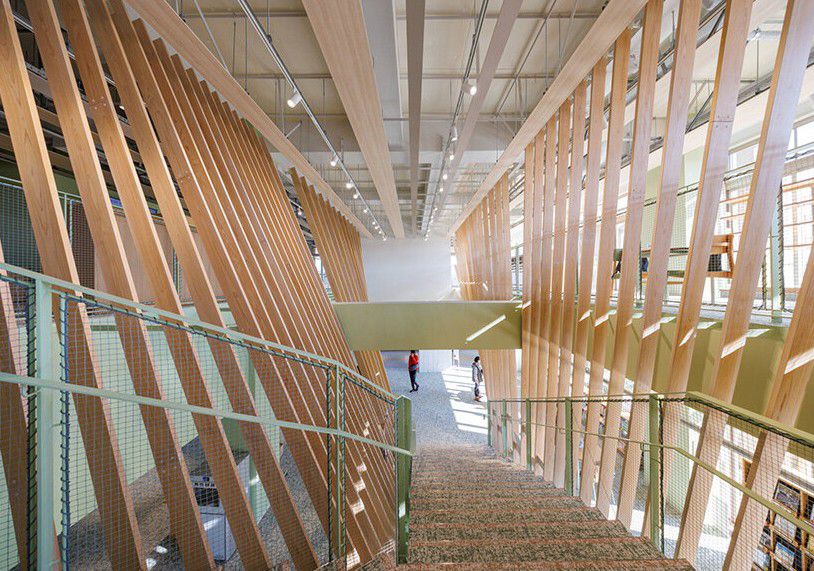
Stairs and walkways pass between these timber clusters, offering varied vantage points across the library. From the upper floor, the arrangement reveals itself as a continuous field rather than discrete elements to guid visitors through reading areas and open seating without fixed boundaries.
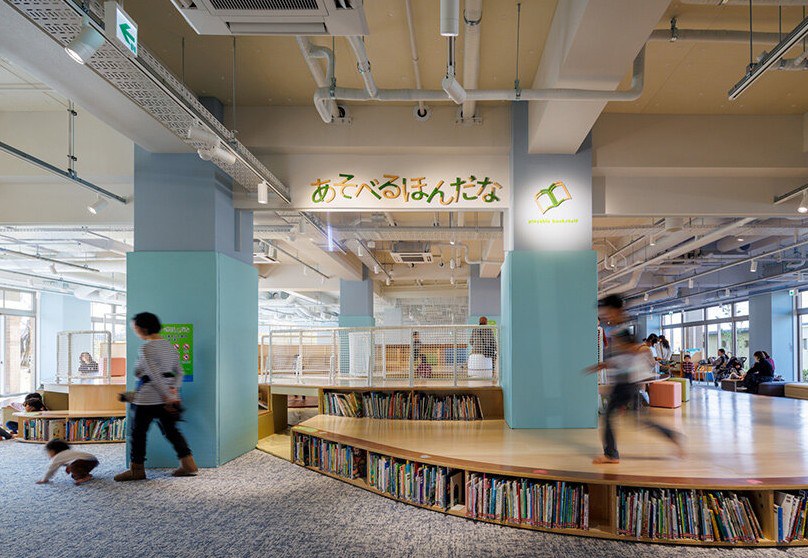
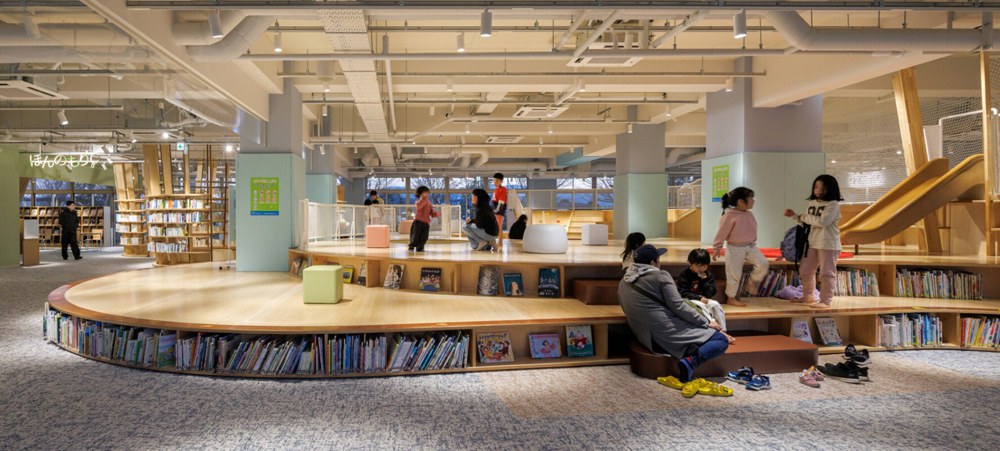
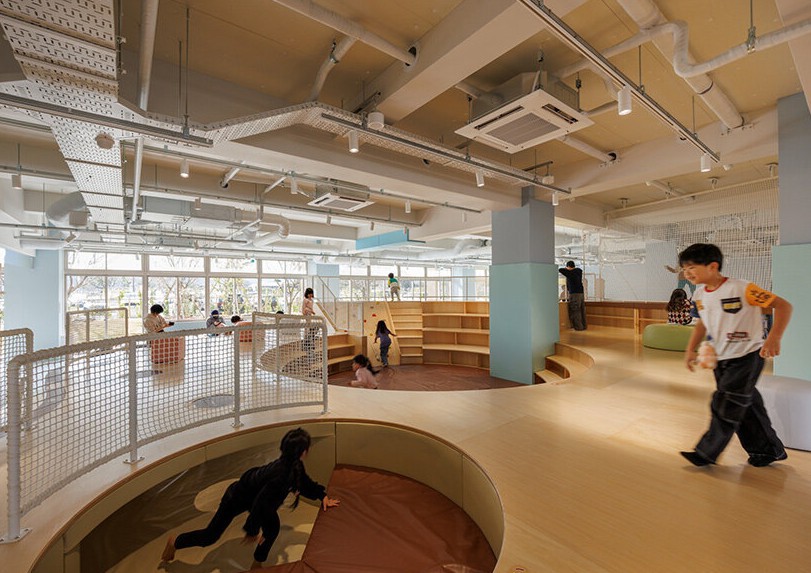
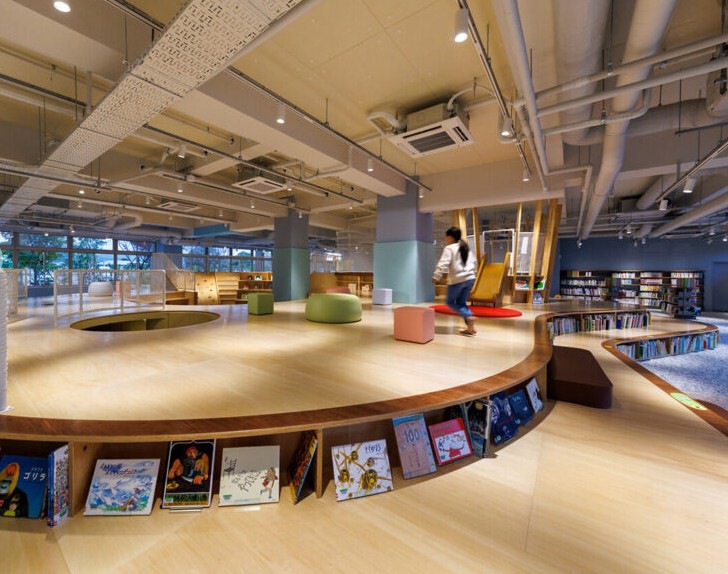
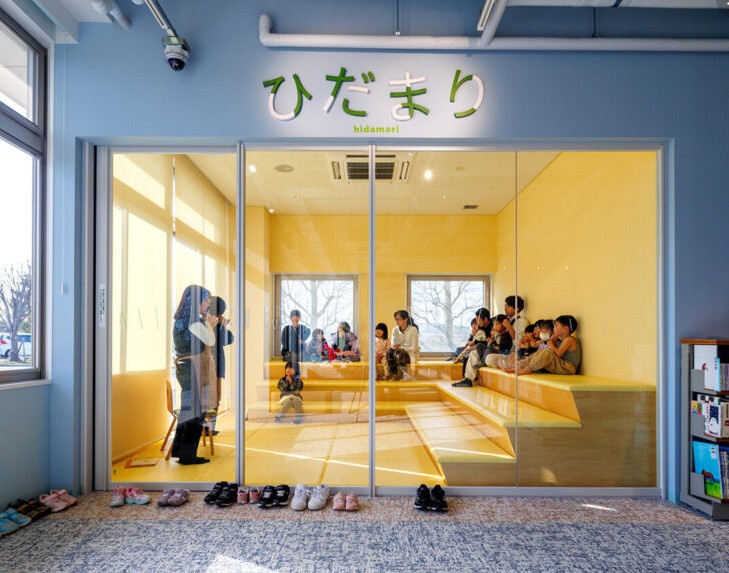
On the ground level, the Chikujō library introduces a series of circular and stepped platforms integrated with low bookshelves. These elements support reading, play, and informal gathering, allowing children to move freely while remaining connected to books. The surfaces are finished in warm wood tones, with soft edges that encourage sitting and climbing.
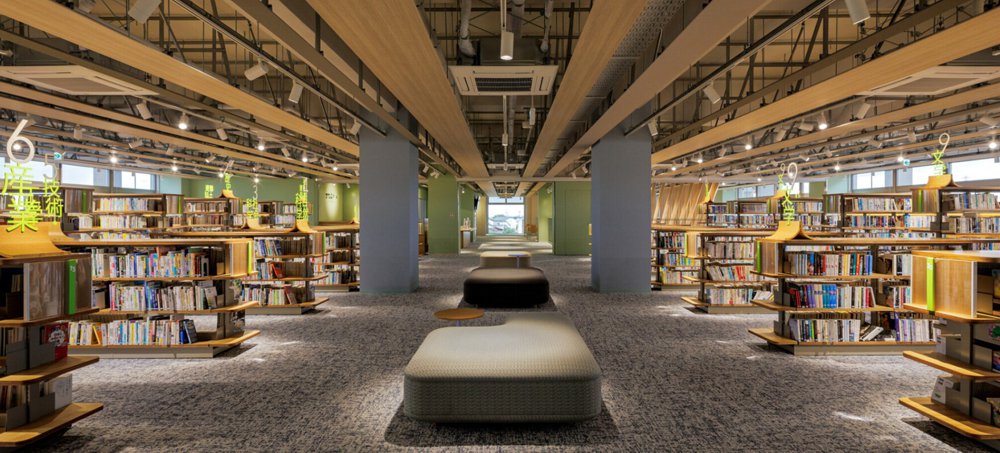
Above, the second floor shifts in tone. Open stacks are arranged with greater regularity, and seating areas are positioned for longer periods of study. The ceiling grid and exposed services remain visible, giving the space a straightforward character that contrasts with the more animated ground level.
YAKETY YAK Furniture Blog, mostly about cool libraries, furniture and design – keeping you abreast of our world.
Source: Designboom
Photography: ©︎ Masaki Hamada / kkpo